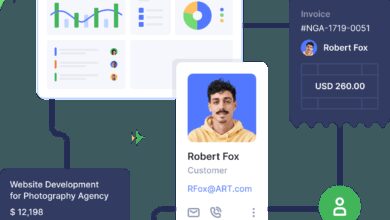
In today’s fast-paced digital world, scalable CRM solutions are no longer a luxury—they’re a necessity. Whether you’re a startup or a growing enterprise, the right CRM system can transform how you manage customer relationships, boost sales, and scale efficiently.
Understanding Scalable CRM Solutions

At its core, a Customer Relationship Management (CRM) system is designed to help businesses manage interactions with current and potential customers. But not all CRMs are built the same. Scalable CRM solutions are specifically engineered to grow alongside your business, adapting to increasing data volumes, user counts, and operational complexity without sacrificing performance.




What Makes a CRM Scalable?
Scalability in CRM refers to the system’s ability to handle growth—both in terms of users and data—without requiring a complete overhaul. A truly scalable CRM can seamlessly accommodate new teams, additional features, and expanded customer bases.
- Flexible Architecture: Built on cloud-native or modular platforms that allow for easy upgrades.
- Performance Under Load: Maintains speed and reliability even as data and user numbers increase.
- Integration Capabilities: Easily connects with other tools like marketing automation, ERP, and e-commerce platforms.
Why Scalability Matters for Modern Businesses
As businesses grow, their customer data expands exponentially. A CRM that can’t scale will quickly become a bottleneck. According to Gartner, companies that implement scalable CRM systems report up to 30% higher customer retention rates and 25% faster sales cycles.
“Scalability isn’t just about size—it’s about agility. The best CRM systems grow with you, not against you.” — CRM Industry Analyst, Forrester Research
Top 7 Scalable CRM Solutions for 2024
Choosing the right CRM can make or break your growth trajectory. Below are seven of the most powerful and scalable CRM solutions available today, each offering unique advantages for businesses at different stages.
1. Salesforce: The Enterprise Powerhouse
Salesforce remains the gold standard for scalable CRM solutions, especially for large enterprises. Its cloud-based platform offers unmatched customization, AI-driven insights (via Einstein AI), and a vast app ecosystem through the AppExchange.
- Handles millions of records with ease.
- Offers industry-specific editions (e.g., Financial Services, Healthcare).
- Strong API support for third-party integrations.
Learn more at salesforce.com.
2. HubSpot CRM: Ideal for Startups and SMBs
HubSpot CRM stands out for its user-friendly interface and free tier that includes essential features like contact management, email tracking, and deal pipelines. As your business grows, you can seamlessly upgrade to paid tiers with advanced marketing, sales, and service hubs.
- Intuitive drag-and-drop workflow builder.
- Powerful automation for lead nurturing.
- Seamless integration with over 1,000 apps.
Explore HubSpot’s scalable features at hubspot.com.
3. Zoho CRM: Cost-Effective and Highly Customizable
Zoho CRM is a favorite among mid-sized businesses looking for affordability without sacrificing functionality. It offers AI-powered sales assistant (Zia), multichannel communication, and deep customization options.
- Multi-org support for businesses with multiple divisions.
- AI-driven forecasting and sentiment analysis.
- Strong mobile app for on-the-go access.
Visit zoho.com/crm for more details.
4. Microsoft Dynamics 365: Deep Integration with Office 365
If your business already uses Microsoft products, Dynamics 365 offers seamless integration with Outlook, Teams, and Excel. It’s particularly strong in sales automation, customer service, and field service management.
- Real-time analytics with Power BI.
- AI-powered insights for customer engagement.
- Flexible deployment options (cloud, on-premise, hybrid).
Discover more at dynamics.microsoft.com.
5. Pipedrive: Sales-Focused and Visual
Pipedrive is built for sales teams that want a visual pipeline to track deals. Its simplicity makes it easy to scale without overwhelming users, and its automation features reduce manual data entry.
- Drag-and-drop pipeline customization.
- Advanced reporting and forecasting tools.
- Strong API and integration with tools like Mailchimp and Slack.
Check out Pipedrive at pipedrive.com.
6. Freshworks CRM (Formerly Freshsales): AI-Driven and User-Centric
Freshworks CRM combines automation, AI, and a clean UI to help sales teams close deals faster. It’s particularly effective for businesses that prioritize customer experience.
- Built-in phone and email within the CRM.
- Lead scoring powered by AI.
- Real-time engagement tracking.
Learn more at freshworks.com/crm.
7. Oracle CX Sales: For Global Enterprises
Oracle’s CRM solution is designed for large, complex organizations with global operations. It offers advanced AI, predictive analytics, and deep integration with ERP and supply chain systems.
- Adaptive intelligence for sales forecasting.
- Multi-language and multi-currency support.
- Comprehensive compliance and security features.
Explore Oracle CX at oracle.com/cx/sales.
Key Features of Scalable CRM Solutions
When evaluating scalable CRM solutions, certain features are non-negotiable. These capabilities ensure that your CRM can evolve with your business needs.
Cloud-Based Infrastructure
Cloud-native CRMs offer automatic updates, remote access, and elastic scalability. Unlike on-premise systems, they don’t require physical servers or IT maintenance, making them ideal for remote teams and distributed operations.
- Automatic backups and disaster recovery.
- Pay-as-you-go pricing models.
- Global data center availability for low latency.
Modular Design and Customization
A modular CRM allows you to add or remove features as needed. For example, you might start with sales automation and later add marketing or customer service modules.
- Custom fields, workflows, and dashboards.
- Role-based access control.
- White-labeling options for agencies.
APIs and Third-Party Integrations
Scalable CRM solutions must integrate with other tools in your tech stack. Whether it’s syncing with your email platform, e-commerce store, or accounting software, APIs make this possible.
- RESTful APIs for custom development.
- Pre-built connectors for popular tools (e.g., Shopify, Mailchimp, QuickBooks).
- Webhooks for real-time data synchronization.
How Scalable CRM Solutions Drive Business Growth
Investing in a scalable CRM isn’t just about managing contacts—it’s about unlocking growth. Here’s how these systems contribute to long-term success.
Improved Customer Retention
By centralizing customer data, scalable CRM solutions enable personalized communication and proactive service. For example, automated follow-ups and birthday emails can strengthen relationships.
- 360-degree customer view across all touchpoints.
- Automated service tickets and resolution tracking.
- Customer satisfaction (CSAT) and Net Promoter Score (NPS) tracking.
Accelerated Sales Cycles
With features like lead scoring, pipeline automation, and AI-driven insights, sales teams can prioritize high-value prospects and close deals faster.
- Automated lead assignment based on territory or expertise.
- Real-time notifications for follow-ups.
- Forecasting accuracy improved by up to 40% (per Salesforce).
Enhanced Team Collaboration
Modern CRMs break down silos between departments. Sales, marketing, and support teams can access the same data, ensuring consistent messaging and coordinated efforts.
- Shared calendars and task assignments.
- Internal commenting and @mentions.
- Document sharing and version control.
Challenges in Implementing Scalable CRM Solutions
Despite their benefits, implementing a scalable CRM isn’t without challenges. Understanding these hurdles can help you plan better and avoid costly mistakes.
Data Migration and Integration Complexity
Moving data from legacy systems to a new CRM can be time-consuming and error-prone. Incomplete or corrupted data can undermine trust in the system.
- Use ETL (Extract, Transform, Load) tools for smooth migration.
- Validate data integrity post-migration.
- Train teams on data entry best practices.
User Adoption and Training
Even the best CRM will fail if employees don’t use it. Resistance to change is common, especially in organizations with entrenched workflows.
- Provide hands-on training sessions.
- Appoint internal CRM champions.
- Start with a pilot group before full rollout.
Cost Management and ROI Tracking
While scalable CRM solutions offer long-term savings, upfront costs (licensing, customization, training) can be high. It’s crucial to track ROI to justify the investment.
- Monitor KPIs like sales conversion rate and customer lifetime value.
- Use built-in analytics to measure CRM impact.
- Optimize licensing by user tier (e.g., full vs. read-only access).
Best Practices for Choosing Scalable CRM Solutions
Selecting the right CRM requires careful evaluation. Follow these best practices to ensure you choose a system that will grow with your business.
Assess Your Current and Future Needs
Don’t just solve today’s problems—anticipate tomorrow’s. Ask: How many users will we have in 2 years? Will we expand to new markets? Do we need multilingual support?
- Conduct a needs assessment with stakeholders from sales, marketing, and IT.
- Map out customer journey stages the CRM must support.
- Define key performance indicators (KPIs) the CRM should help improve.
Evaluate Vendor Support and Roadmap
A vendor’s commitment to innovation and customer support is critical. Look for companies that release regular updates and offer responsive technical assistance.
- Check customer reviews on platforms like G2 and Capterra.
- Ask about SLAs (Service Level Agreements) for support.
- Review the product roadmap for upcoming features.
Test with a Free Trial or Pilot Program
Most scalable CRM solutions offer free trials or sandbox environments. Use this time to test core functionalities, integrations, and user experience.
- Simulate real-world scenarios (e.g., onboarding a new lead).
- Gather feedback from end-users.
- Assess performance under heavy data load.
The Future of Scalable CRM Solutions
The CRM landscape is evolving rapidly, driven by AI, automation, and changing customer expectations. Here’s what the future holds for scalable CRM solutions.
AI and Predictive Analytics
AI is transforming CRMs from reactive tools to proactive advisors. Future systems will predict customer churn, recommend next-best actions, and automate routine tasks with minimal human input.
- Natural language processing (NLP) for sentiment analysis.
- Predictive lead scoring based on behavioral data.
- AI-powered chatbots for instant customer support.
Hyper-Personalization at Scale
Customers expect personalized experiences, even from large brands. Scalable CRM solutions will leverage data from multiple sources to deliver tailored content, offers, and communication.
- Dynamic content based on browsing behavior.
- Personalized email campaigns triggered by CRM data.
- Segmentation based on predictive models.
Integration with Emerging Technologies
CRMs will increasingly integrate with IoT devices, voice assistants, and augmented reality (AR) to capture real-time customer interactions.
- IoT sensors feeding usage data into CRM for proactive service.
- Voice CRM for hands-free data entry and queries.
- AR-powered product demos linked to customer profiles.
Real-World Case Studies: Success with Scalable CRM Solutions
Theoretical benefits are one thing, but real-world results speak louder. Let’s look at how companies have leveraged scalable CRM solutions to achieve remarkable growth.
Case Study 1: Tech Startup Scales from 10 to 500 Employees
A SaaS startup used HubSpot CRM to manage its customer lifecycle. As the company grew, it upgraded to HubSpot’s Enterprise tier, enabling advanced segmentation, automation, and reporting. Within 18 months, customer acquisition costs dropped by 22%, and sales productivity increased by 35%.
“HubSpot grew with us. We didn’t have to switch systems when we scaled—that saved us months of transition time.” — CEO, TechScale Inc.
Case Study 2: Retail Chain Improves Customer Retention
A national retail chain implemented Salesforce to unify customer data across 50+ stores. By leveraging AI-driven insights, they personalized promotions and reduced customer churn by 18%. The CRM’s scalability allowed them to add new locations without additional IT overhead.
Case Study 3: B2B Service Provider Boosts Lead Conversion
A B2B consulting firm adopted Zoho CRM to streamline its sales process. With automated lead scoring and workflow automation, they increased lead-to-customer conversion by 40% within a year. The modular design allowed them to add a customer support module as their client base expanded.
What are scalable CRM solutions?
Scalable CRM solutions are customer relationship management systems designed to grow with your business. They handle increasing data, users, and functionality without performance degradation, often through cloud-based, modular architectures.
Which CRM is best for scaling businesses?
The best CRM depends on your size and needs. Salesforce and Oracle are ideal for large enterprises, while HubSpot and Zoho are great for SMBs. Pipedrive excels in sales-focused environments.
How do scalable CRMs improve sales performance?
They automate workflows, provide AI-driven insights, centralize customer data, and enable better team collaboration—leading to faster sales cycles, higher conversion rates, and improved forecasting accuracy.
Can small businesses benefit from scalable CRM solutions?
Absolutely. Many scalable CRM solutions like HubSpot and Zoho offer free or low-cost entry tiers, allowing small businesses to start small and upgrade as they grow—without switching platforms.
What should I look for in a scalable CRM?
Look for cloud-based infrastructure, modular design, strong API support, user-friendly interface, vendor reliability, and proven scalability in businesses similar to yours.
Scalable CRM solutions are more than just software—they’re strategic growth engines. From startups to global enterprises, the right CRM can streamline operations, deepen customer relationships, and drive revenue. By understanding your needs, evaluating key features, and learning from real-world successes, you can choose a system that not only meets today’s demands but also supports tomorrow’s ambitions. The future of customer engagement is scalable, intelligent, and integrated—and it starts with the right CRM.
Further Reading: