In today’s hyper-competitive business landscape, mastering customer relationships is no longer optional—it’s essential. Enter CRM performance tools: the game-changing solutions that empower businesses to track, analyze, and optimize every customer interaction. These tools don’t just store data—they transform it into actionable insights, driving smarter decisions and explosive growth.
What Are CRM Performance Tools and Why They Matter

CRM performance tools are specialized software features or integrated platforms designed to measure, analyze, and enhance the effectiveness of Customer Relationship Management (CRM) systems. They go beyond basic contact management by offering analytics, automation, reporting, and real-time monitoring capabilities that help businesses understand how well their CRM is performing in driving sales, improving customer service, and increasing retention.




Defining CRM Performance Tools
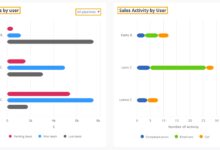
At their core, CRM performance tools are mechanisms that evaluate the health and impact of your CRM strategy. They include dashboards, KPI trackers, sales forecasting modules, customer behavior analytics, and workflow automation engines. These tools integrate with your existing CRM platform—such as Salesforce, HubSpot, or Zoho—to extract meaningful data and convert it into performance metrics.
For example, a tool like Salesforce Sales Cloud offers built-in performance analytics that track lead conversion rates, sales cycle length, and team productivity. These insights allow managers to identify bottlenecks and optimize processes in real time.
Key Components of CRM Performance Tools
Effective CRM performance tools typically consist of several core components:
Real-Time Dashboards: Visual interfaces that display key metrics such as sales volume, customer acquisition cost, and support ticket resolution times.KPI Tracking Modules: Tools that monitor predefined performance indicators like customer lifetime value (CLV), churn rate, and first response time.Automated Reporting: Scheduled or on-demand reports that summarize CRM activity, helping stakeholders stay informed without manual data pulling.Integration Capabilities: APIs and connectors that allow CRM performance tools to sync with marketing automation, ERP, and customer service platforms..
“Data is useless without insight.CRM performance tools turn raw CRM data into strategic intelligence.” — Gartner Research
Why CRM Performance Tools Are Non-Negotiable Today
In an era where customer expectations are higher than ever, businesses can’t afford to operate blindly.CRM performance tools provide the visibility needed to make informed decisions.According to a McKinsey report, companies that leverage data-driven CRM strategies see up to 20% higher customer satisfaction and 15% increased sales productivity..
Moreover, these tools help align sales, marketing, and customer service teams around common goals. When everyone has access to the same performance data, collaboration improves, and silos break down. This alignment is critical for delivering a seamless customer experience across all touchpoints.
Top 7 CRM Performance Tools Transforming Businesses in 2024
The market for CRM performance tools is booming, with new innovations emerging every year. To help you navigate this landscape, we’ve curated a list of the seven most powerful CRM performance tools that are setting the standard for excellence in 2024. Each of these tools offers unique capabilities that enhance visibility, efficiency, and strategic decision-making.
1. Salesforce Einstein Analytics
Salesforce Einstein Analytics is a leading AI-powered CRM performance tool that delivers deep insights through predictive analytics and machine learning. It integrates seamlessly with Salesforce CRM to provide real-time dashboards, automated forecasts, and intelligent recommendations.
One of its standout features is the ability to predict customer churn by analyzing historical interaction patterns. For instance, if a customer hasn’t logged into their account in 30 days and has stopped opening emails, Einstein can flag this account for proactive outreach.
Businesses using Einstein Analytics report a 30% improvement in forecast accuracy and a 25% reduction in response time to customer inquiries. Its drag-and-drop interface makes it accessible even for non-technical users, democratizing data access across departments.
2. HubSpot Operations Hub
HubSpot’s Operations Hub is more than just a CRM—it’s a full-fledged performance engine. Designed for mid-sized businesses, it offers advanced reporting, data synchronization, and workflow automation tools that ensure your CRM runs like a well-oiled machine.
The platform excels in data quality management. It automatically cleanses duplicate entries, standardizes contact information, and syncs data across multiple sources. This ensures that performance metrics are based on accurate, up-to-date information.
According to HubSpot’s official case studies, companies using Operations Hub see a 40% increase in data accuracy and a 35% boost in team productivity due to reduced manual data entry.
3. Zoho Analytics with CRM Integration
Zoho Analytics is a powerful business intelligence tool that connects directly to Zoho CRM and other third-party applications. It enables users to create custom reports, interactive dashboards, and trend analyses that reveal hidden patterns in customer behavior.
What sets Zoho apart is its affordability and scalability. Small businesses can start with basic reporting and gradually adopt advanced features like AI-driven insights and multi-departmental dashboards. The tool also supports natural language queries—users can simply type “Show me last quarter’s sales by region” and get instant results.
With Zoho Analytics, sales managers can identify underperforming territories, marketing teams can measure campaign ROI, and executives can monitor overall CRM health—all from a single platform.
4. Microsoft Dynamics 365 Insights
Microsoft Dynamics 365 Insights leverages the power of Azure AI and Power BI to deliver enterprise-grade CRM performance analytics. It’s ideal for large organizations that need robust security, compliance, and integration with Microsoft 365 tools.
The platform offers sentiment analysis on customer communications, helping service teams understand emotional tone in emails and chat transcripts. It also provides predictive lead scoring, which ranks prospects based on their likelihood to convert.
One global logistics company reported a 50% reduction in customer complaint resolution time after implementing Dynamics 365 Insights. By identifying negative sentiment early, they were able to escalate issues before they escalated into formal complaints.
5. Pipedrive’s Conversion Insights
Pipedrive, known for its intuitive sales pipeline interface, has enhanced its platform with Conversion Insights—a dedicated CRM performance tool that tracks deal progression, identifies drop-off points, and recommends actions to improve close rates.
For example, if deals consistently stall at the proposal stage, the tool will suggest adding a follow-up template or scheduling a demo call. It also calculates average deal velocity and compares team performance across different pipelines.
Small sales teams love Pipedrive because it turns complex data into simple, actionable advice. A survey of Pipedrive users found that 78% felt more confident in their sales forecasting after using Conversion Insights.
6. Freshsales Freddy AI
Freshsales, part of the Freshworks suite, offers Freddy AI—an intelligent assistant that enhances CRM performance through automation and predictive analytics. Freddy can auto-populate contact details, suggest the best time to call leads, and even draft personalized email responses.
One of its most powerful features is AI-powered deal prediction. By analyzing thousands of historical deals, Freddy can estimate the probability of closing a current opportunity and recommend next steps to increase chances of success.
According to Freshworks, businesses using Freddy AI experience a 20% faster sales cycle and a 15% higher conversion rate compared to those relying on manual processes.
7. Insightly Intelligence
Insightly Intelligence is a CRM performance tool tailored for project-based businesses. It combines CRM data with project management metrics to give a holistic view of customer engagement and profitability.
The tool tracks time spent on client projects, links tasks to sales opportunities, and calculates project ROI. This is especially valuable for agencies, consultants, and professional services firms that bill by the hour.
By integrating CRM performance with project outcomes, Insightly helps businesses identify which clients are most profitable and which projects drain resources. One digital marketing agency reported a 30% increase in profit margins after using Insightly to reallocate resources to high-value clients.
How CRM Performance Tools Improve Sales Team Productivity
Sales teams are often overwhelmed with administrative tasks, follow-ups, and data entry—activities that take time away from selling. CRM performance tools streamline these processes, allowing reps to focus on what they do best: building relationships and closing deals.
Automating Routine Tasks
One of the biggest productivity killers in sales is manual data entry. CRM performance tools like Salesforce Einstein and HubSpot automate the logging of calls, emails, and meetings, ensuring that every interaction is captured without human intervention.
For example, when a sales rep sends an email through the CRM, the tool automatically records it, updates the contact timeline, and logs engagement metrics such as open and click rates. This eliminates the need for reps to manually update records after each interaction.
Enhancing Lead Prioritization
Not all leads are created equal. CRM performance tools use lead scoring models to rank prospects based on their behavior, demographics, and engagement level. High-scoring leads are prioritized for immediate follow-up, while low-scoring ones are nurtured with automated email sequences.
This intelligent prioritization ensures that sales teams spend their time on the most promising opportunities. A study by Nucleus Research found that companies using lead scoring saw a 30% increase in lead conversion rates.
Providing Real-Time Coaching
Modern CRM performance tools don’t just track performance—they help improve it. Features like call transcription, sentiment analysis, and performance benchmarks allow managers to provide real-time coaching to their teams.
For instance, if a rep consistently fails to mention a key product benefit during calls, the CRM can flag this pattern and suggest training modules. Some tools even offer AI-powered role-playing simulations to help reps practice difficult conversations.
“The best sales teams don’t guess—they measure, adapt, and optimize using CRM performance tools.” — Harvard Business Review
Boosting Customer Service with CRM Performance Analytics
Exceptional customer service isn’t just about being friendly—it’s about being fast, accurate, and proactive. CRM performance tools empower support teams with the data and automation they need to deliver outstanding experiences at scale.
Reducing Response and Resolution Times
One of the most critical KPIs in customer service is first response time. CRM performance tools can automatically assign tickets based on agent availability, skill set, and workload. They also provide suggested responses using AI, cutting down the time agents spend typing repetitive answers.
For example, Zendesk’s Answer Bot integrates with CRM systems to provide instant replies to common queries, reducing average response time by up to 60%. When human agents do step in, they have full context of the customer’s history, preventing frustrating repeat explanations.
Tracking Customer Satisfaction Metrics
Tools like Net Promoter Score (NPS) trackers, Customer Satisfaction (CSAT) surveys, and Customer Effort Score (CES) are now standard features in advanced CRM platforms. These metrics are automatically collected and analyzed to gauge overall service quality.
CRM performance tools can correlate satisfaction scores with specific agents, departments, or interaction types. If CSAT drops after a system outage, the tool can flag this trend and trigger a root cause analysis.
Enabling Proactive Support
The future of customer service is proactive, not reactive. CRM performance tools use predictive analytics to anticipate issues before they occur. For example, if a customer’s usage of a software product declines sharply, the system can trigger an automated check-in email or assign a success manager to intervene.
Companies like Adobe and Salesforce use such proactive alerts to reduce churn by up to 25%. By addressing problems before customers complain, they build trust and loyalty.
Measuring Marketing ROI with CRM Performance Tools
Marketing teams often struggle to prove their value. CRM performance tools bridge the gap between marketing activities and revenue outcomes by providing clear attribution models and campaign performance dashboards.
Attribution Modeling and Campaign Tracking
CRM performance tools can track a lead from the first ad click to the final sale, assigning credit to each touchpoint along the way. Multi-touch attribution models show whether a whitepaper download, webinar attendance, or social media ad played a role in conversion.
This level of insight allows marketers to optimize budget allocation. If LinkedIn ads generate higher-quality leads than Google Ads, the team can shift spend accordingly. According to a Capterra report, businesses using attribution modeling in their CRM see a 22% higher ROI on marketing spend.
Lead Source Effectiveness Analysis
Not all lead sources are equally valuable. CRM performance tools analyze which channels—organic search, paid ads, referrals, or events—generate the most conversions, highest CLV, and lowest acquisition cost.
For example, a B2B software company might discover that trade show leads have a 40% higher close rate than cold outreach leads. Armed with this data, they can justify increased investment in event marketing.
Personalization at Scale
CRM performance tools enable hyper-personalized marketing by segmenting audiences based on behavior, preferences, and lifecycle stage. Automated workflows can send tailored content, product recommendations, and special offers to each segment.
Netflix and Amazon are pioneers in this space, but CRM tools now make similar capabilities accessible to smaller businesses. A study by Epsilon found that personalized emails deliver 6x higher transaction rates than generic ones.
Integrating CRM Performance Tools with Other Business Systems
CRM performance tools don’t exist in isolation. Their true power is unlocked when they’re integrated with other enterprise systems like ERP, marketing automation, HR platforms, and financial software.
Syncing with Marketing Automation Platforms
Integration with tools like Marketo, Mailchimp, or ActiveCampaign allows CRM performance tools to track the full customer journey. When a lead clicks a link in an email, the CRM updates their engagement score and notifies the sales team.
This closed-loop system ensures that marketing efforts are directly tied to sales outcomes. It also enables A/B testing of campaigns with real revenue data, not just open rates.
Connecting to ERP and Financial Systems
Linking CRM performance tools to ERP systems like SAP or Oracle provides a complete view of profitability. Sales data from the CRM can be matched with inventory levels, shipping costs, and payment history from the ERP.
This integration helps answer critical questions: Is a high-revenue client actually profitable after fulfillment costs? Are certain products consistently delayed in delivery, affecting customer satisfaction? These insights drive smarter pricing, inventory, and service decisions.
Unifying Data Across Departments
One of the biggest challenges in large organizations is data silos. CRM performance tools act as a central hub, pulling data from sales, service, marketing, and finance into a single source of truth.
When all departments access the same performance metrics, alignment improves. For example, if customer service reports a spike in complaints about a product defect, the marketing team can pause campaigns promoting that product until the issue is resolved.
“Integration is the key to unlocking the full potential of CRM performance tools.” — Forrester Research
Future Trends in CRM Performance Tools: What’s Next?
The evolution of CRM performance tools is accelerating, driven by advancements in AI, machine learning, and real-time data processing. The next generation of tools will be more predictive, autonomous, and user-centric than ever before.
AI-Powered Predictive Analytics
Future CRM performance tools will not only report on what happened but predict what will happen. AI models will forecast customer behavior, market shifts, and sales trends with increasing accuracy.
Imagine a tool that tells you which customers are likely to upgrade their subscription next month or which sales rep is at risk of missing their quota. These predictions will be based on real-time data from emails, calls, social media, and transaction history.
Hyper-Personalization Engines
Personalization will go beyond using a customer’s first name in an email. Next-gen CRM tools will create dynamic content in real time based on mood, location, device, and past behavior.
For example, if a customer views a product page but doesn’t buy, the CRM could trigger a personalized video message from their account manager, offering a limited-time discount. These micro-moments of relevance will drive higher engagement and loyalty.
Real-Time Collaboration Features
Future CRM performance tools will include built-in collaboration features like shared workspaces, live chat between teams, and AI-mediated meetings. Sales, marketing, and service teams will collaborate within the CRM itself, reducing the need for external tools like Slack or email.
These features will be especially valuable for remote and hybrid teams, ensuring that everyone stays aligned on customer goals and performance metrics.
What are CRM performance tools?
CRM performance tools are software solutions that measure, analyze, and optimize the effectiveness of Customer Relationship Management systems. They provide insights into sales, marketing, and customer service performance through dashboards, KPIs, automation, and analytics.
How do CRM performance tools improve sales productivity?
They automate routine tasks like data entry, prioritize high-value leads using scoring models, and provide real-time coaching through AI and performance tracking. This allows sales teams to focus on closing deals rather than administrative work.
Can small businesses benefit from CRM performance tools?
Absolutely. Many CRM performance tools, such as Zoho Analytics and Pipedrive, offer scalable, affordable plans tailored for small businesses. These tools help level the playing field by providing enterprise-grade insights without the enterprise cost.
Do CRM performance tools integrate with other software?
Yes, most modern CRM performance tools offer robust integration capabilities with marketing automation, ERP, email, calendar, and customer service platforms via APIs and pre-built connectors.
What is the future of CRM performance tools?
The future lies in AI-driven predictive analytics, hyper-personalization, real-time collaboration, and autonomous decision-making. These tools will become more intuitive, proactive, and deeply embedded in daily business operations.
CRM performance tools are no longer a luxury—they are a strategic necessity for any business serious about growth, efficiency, and customer satisfaction. From automating mundane tasks to delivering AI-powered insights, these tools transform CRM systems from static databases into dynamic engines of performance. Whether you’re a small startup or a global enterprise, investing in the right CRM performance tools can unlock unprecedented levels of productivity, alignment, and profitability. The future of customer relationships is data-driven, and the tools to master it are already here.
Further Reading: