In today’s hyper-competitive business landscape, a robust CRM for enterprises isn’t just a tool—it’s a strategic powerhouse. Discover how top companies leverage enterprise CRM systems to drive growth, boost efficiency, and dominate their markets.
Understanding CRM for Enterprises: Beyond Basic Customer Management

When we talk about CRM for enterprises, we’re not referring to the simple contact databases used by small businesses. Enterprise-level CRM systems are comprehensive platforms designed to manage vast customer data, streamline complex sales cycles, and integrate seamlessly across global departments. These systems are built to scale, offering advanced analytics, automation, and security features that smaller CRMs simply can’t match.




What Sets Enterprise CRM Apart from SMB Solutions?
While small and medium-sized businesses (SMBs) often use off-the-shelf CRM tools like HubSpot or Zoho, enterprises require more robust, customizable, and secure platforms. Enterprise CRM solutions like Salesforce, Microsoft Dynamics 365, and Oracle CX are engineered for high-volume data processing, multi-region compliance, and integration with legacy systems.
- Scalability to handle millions of customer records
- Advanced security protocols including role-based access and data encryption
- Deep integration capabilities with ERP, marketing automation, and supply chain systems
According to Gartner, the global CRM market is projected to exceed $80 billion by 2025, with enterprise adoption driving much of this growth.
Core Components of a Modern Enterprise CRM
A comprehensive CRM for enterprises typically includes several interconnected modules that work in unison to deliver a 360-degree view of the customer. These components are not standalone tools but integrated systems that feed data into a centralized platform.
- Sales Force Automation (SFA): Tracks leads, manages pipelines, and automates follow-ups.
- Customer Service & Support: Enables ticketing, knowledge bases, and omnichannel support (email, chat, phone).
- Marketing Automation: Manages campaigns, lead scoring, and customer segmentation.
- Analytics & Reporting: Provides real-time dashboards, predictive insights, and KPI tracking.
“A well-implemented CRM for enterprises can increase sales productivity by up to 34%, according to Nucleus Research.”
Top 7 Benefits of Implementing CRM for Enterprises
Deploying a CRM for enterprises is not just about managing contacts—it’s about transforming the entire customer lifecycle. From lead generation to post-sale support, enterprise CRM systems deliver measurable ROI across departments. Let’s explore the seven most impactful benefits.
1. Enhanced Customer Insights and Personalization
One of the most powerful advantages of a CRM for enterprises is the ability to aggregate customer data from multiple touchpoints—website visits, email interactions, social media, and purchase history. This unified view enables hyper-personalized marketing and service.
For example, a global bank using Salesforce CRM can analyze transaction patterns and recommend personalized financial products in real time. This level of personalization increases customer satisfaction and boosts conversion rates.
- Behavioral tracking across digital channels
- AI-driven product recommendations
- Dynamic content personalization in emails and web portals
2. Streamlined Sales Processes and Higher Conversion Rates
Enterprise CRM systems automate repetitive tasks such as data entry, lead assignment, and follow-up scheduling. This allows sales teams to focus on high-value activities like relationship building and negotiation.
With features like lead scoring and pipeline forecasting, managers can identify high-potential opportunities and allocate resources more effectively. A study by Salesforce found that companies using CRM see a 29% increase in sales performance.
- Automated lead routing based on geography, product interest, or seniority
- Real-time sales coaching through AI-powered insights
- Integration with CPQ (Configure, Price, Quote) tools for faster deal closure
3. Improved Cross-Departmental Collaboration
In large organizations, silos between sales, marketing, and customer service can lead to inconsistent customer experiences. A CRM for enterprises breaks down these barriers by providing a single source of truth.
For instance, when a customer service agent logs a complaint, the CRM automatically notifies the account manager and triggers a follow-up from marketing with a retention offer. This level of coordination is only possible with a unified platform.
- Shared customer timelines across departments
- Internal collaboration tools like Chatter (Salesforce) or Teams integration
- Automated workflows that trigger actions across teams
Key Features to Look for in a CRM for Enterprises
Not all CRM systems are created equal. When selecting a CRM for enterprises, decision-makers must evaluate a range of technical and functional capabilities. The right platform should not only meet current needs but also support future growth and innovation.
Scalability and Cloud Architecture
Enterprises operate across multiple regions, time zones, and business units. A CRM must be able to scale horizontally and vertically to accommodate growing data volumes and user bases.
Cloud-native platforms like Microsoft Dynamics 365 and SAP C/4HANA offer elastic scalability, allowing companies to add users, storage, and processing power on demand. This is critical for global enterprises with fluctuating workloads.
- Multi-tenant vs. single-tenant architecture considerations
- Auto-scaling capabilities during peak usage periods
- Global data center availability for low-latency access
Advanced Analytics and AI Integration
Modern CRM for enterprises goes beyond basic reporting. It leverages artificial intelligence to deliver predictive analytics, sentiment analysis, and next-best-action recommendations.
Salesforce Einstein, for example, uses machine learning to predict which leads are most likely to convert, recommend optimal call times, and even draft personalized email responses. These AI-driven insights reduce guesswork and increase efficiency.
- Predictive lead scoring
- Sentiment analysis of customer communications
- Forecasting accuracy improvements of up to 40%
“AI in CRM is expected to increase business productivity by 44% by 2025, according to IDC.”
Security, Compliance, and Data Governance
For enterprises, data security is non-negotiable. A CRM for enterprises must comply with global regulations such as GDPR, CCPA, HIPAA, and SOC 2. It should also offer granular control over data access and audit trails.
Features like end-to-end encryption, multi-factor authentication, and data residency controls are essential. Additionally, enterprises need role-based permissions to ensure that employees only access data relevant to their job function.
- Compliance with regional data protection laws
- Regular third-party security audits
- Automated data retention and deletion policies
Top CRM Platforms for Enterprises in 2024
The enterprise CRM market is dominated by a few key players, each offering unique strengths. Choosing the right platform depends on your industry, existing tech stack, and long-term digital strategy.
Salesforce: The Market Leader in Enterprise CRM
Salesforce continues to lead the CRM for enterprises space, holding over 19% of the global market share. Its platform is renowned for its flexibility, extensive app ecosystem (AppExchange), and strong AI capabilities through Einstein.
Industries like financial services, healthcare, and telecommunications rely on Salesforce for its industry-specific clouds (e.g., Financial Services Cloud, Health Cloud) and deep customization options.
- Over 3,000+ apps available on AppExchange
- Strong API support for custom integrations
- Comprehensive training and certification programs via Trailhead
Learn more at Salesforce.com.
Microsoft Dynamics 365: Seamless Integration with Office 365
For enterprises already invested in the Microsoft ecosystem, Dynamics 365 offers a compelling choice. It integrates natively with Outlook, Teams, SharePoint, and Power BI, making it easier to adopt across departments.
Dynamics 365 is particularly strong in manufacturing, retail, and professional services. Its modular design allows companies to start with sales or service modules and expand over time.
- Deep integration with Microsoft 365 and Azure
- Power BI for advanced data visualization
- AI-powered insights through Microsoft Copilot
Explore more at Dynamics.Microsoft.com.
Oracle CX and SAP C/4HANA: Powerhouses for Complex Operations
Oracle and SAP cater to large enterprises with complex operational needs, especially in industries like logistics, energy, and government. Both platforms offer end-to-end customer experience management with strong ERP integration.
Oracle CX excels in AI-driven customer journey orchestration, while SAP C/4HANA is known for its real-time data processing and integration with SAP S/4HANA.
- Oracle Unity Customer Data Platform for real-time personalization
- SAP’s in-memory computing for instant analytics
- Strong support for B2B and B2C hybrid models
Visit Oracle.com/CX and SAP.com for more details.
Implementation Best Practices for CRM for Enterprises
Even the most advanced CRM for enterprises will fail if not implemented correctly. A successful rollout requires careful planning, stakeholder alignment, and change management.
Define Clear Objectives and KPIs
Before selecting a platform, enterprises must define what success looks like. Is the goal to increase sales conversion by 20%? Reduce customer service response time by 50%? Improve customer retention by 15%?
These objectives should translate into measurable KPIs that are tracked from day one. Without clear goals, it’s impossible to evaluate ROI or make data-driven adjustments.
- Set SMART goals (Specific, Measurable, Achievable, Relevant, Time-bound)
- Align CRM objectives with overall business strategy
- Establish a cross-functional steering committee
Ensure Data Quality and Migration Strategy
Poor data quality is one of the top reasons for CRM failure. Duplicate records, outdated information, and inconsistent formatting can undermine even the most sophisticated system.
Enterprises must invest in data cleansing, deduplication, and standardization before migration. Tools like Informatica and Talend can automate much of this process.
- Conduct a comprehensive data audit
- Define data governance policies and ownership
- Use ETL (Extract, Transform, Load) tools for smooth migration
Train Users and Drive Adoption
A CRM for enterprises is only as effective as its users. Without proper training and ongoing support, employees may resist the new system or use it incorrectly.
Best-in-class companies invest in role-based training, create internal champions, and provide continuous learning resources. Gamification and performance incentives can also boost engagement.
- Develop training programs tailored to different roles (sales, service, marketing)
- Appoint CRM super-users in each department
- Use in-app guidance and video tutorials for just-in-time learning
“Companies that prioritize user adoption see 3x higher ROI from their CRM investments.”
Integration of CRM for Enterprises with Other Business Systems
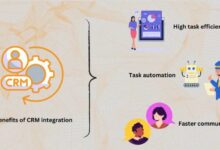
A standalone CRM is no longer sufficient. To unlock its full potential, a CRM for enterprises must integrate with other core systems such as ERP, HRIS, marketing automation, and supply chain platforms.
CRM and ERP Integration: A Game-Changer for Operational Efficiency
Integrating CRM with ERP systems like SAP, Oracle, or NetSuite enables seamless flow of data between customer-facing and back-office operations. When a sales order is created in CRM, it automatically updates inventory, billing, and fulfillment in ERP.
This integration eliminates manual data entry, reduces errors, and accelerates order-to-cash cycles. For example, a manufacturing company can use integrated CRM-ERP to provide real-time delivery estimates based on production schedules.
- Synchronized customer, product, and pricing data
- Automated invoicing and revenue recognition
- Improved supply chain visibility
Connecting CRM with Marketing Automation and Analytics
Modern marketing relies on data-driven campaigns. By integrating CRM with platforms like Marketo, HubSpot, or Adobe Experience Cloud, enterprises can create closed-loop marketing that tracks leads from first touch to revenue.
Analytics tools like Google Analytics 360 and Tableau can pull CRM data to visualize customer journeys, identify drop-off points, and optimize conversion funnels.
- Lead nurturing workflows triggered by CRM data
- Attribution modeling to measure campaign ROI
- Real-time dashboards combining CRM and web analytics
APIs and Middleware: The Backbone of Integration
Most enterprise CRMs offer robust APIs (Application Programming Interfaces) that allow custom integrations. However, managing multiple point-to-point connections can become complex.
Middleware platforms like MuleSoft (owned by Salesforce), Dell Boomi, and IBM App Connect provide a centralized integration layer that simplifies connectivity and ensures data consistency.
- REST and SOAP APIs for real-time data exchange
- Pre-built connectors for popular business applications
- Monitoring and logging for integration health
The Future of CRM for Enterprises: AI, Automation, and Hyper-Personalization
The evolution of CRM for enterprises is accelerating. Emerging technologies are reshaping how companies interact with customers, making CRM systems more intelligent, proactive, and predictive.
AI-Powered Customer Service and Virtual Agents
Chatbots and virtual assistants powered by natural language processing (NLP) are becoming standard in enterprise CRM. These tools can handle routine inquiries, escalate complex issues, and even suggest solutions based on past interactions.
For example, a telecom company might use an AI agent to troubleshoot internet connectivity issues, reducing call center volume by 30%.
- 24/7 customer support with low operational cost
- Seamless handoff to human agents when needed
- Continuous learning from customer interactions
Predictive Analytics and Next-Best-Action Engines
Future CRM systems will move beyond reactive support to proactive engagement. Predictive models will anticipate customer needs—such as a credit card holder about to exceed their limit—and trigger personalized offers or warnings.
Next-best-action engines will guide sales reps on the optimal product to recommend, the best time to call, or the most effective discount to offer.
- Reduced churn through early intervention
- Increased cross-sell and upsell opportunities
- Dynamic pricing and offer optimization
Customer Data Platforms (CDPs) and Unified Profiles
The rise of Customer Data Platforms (CDPs) is enabling enterprises to create a single, real-time view of the customer across all channels. Unlike traditional CRMs that store transactional data, CDPs aggregate behavioral, demographic, and psychographic data from online and offline sources.
When integrated with a CRM for enterprises, CDPs enable hyper-personalization at scale. For instance, a retail brand can send a personalized offer to a customer who abandoned a cart, based on their browsing history, past purchases, and social media activity.
- Real-time customer profile updates
- Consent management for privacy compliance
- Segmentation based on micro-behaviors
“By 2025, 70% of enterprises will use CDPs to unify customer data, up from 30% in 2022 (Gartner).”
What is CRM for enterprises?
CRM for enterprises refers to advanced customer relationship management systems designed for large organizations with complex sales, service, and marketing needs. These platforms offer scalability, deep integration, and AI-driven insights to manage customer interactions at scale.
How does CRM improve sales productivity?
A CRM for enterprises automates routine tasks, provides real-time insights, and enables better lead management. This allows sales teams to focus on closing deals rather than administrative work, resulting in higher conversion rates and shorter sales cycles.
Which CRM is best for large enterprises?
The best CRM for enterprises depends on specific needs, but top contenders include Salesforce, Microsoft Dynamics 365, Oracle CX, and SAP C/4HANA. Factors like industry, integration requirements, and existing tech stack influence the choice.
How long does CRM implementation take?
Implementation timelines vary, but enterprise CRM deployments typically take 6 to 18 months due to complexity, data migration, and user training. Agile methodologies and phased rollouts can reduce time-to-value.
Can CRM systems integrate with ERP?
Yes, most enterprise CRM systems offer seamless integration with ERP platforms like SAP, Oracle, and Microsoft Dynamics. This integration ensures data consistency and improves operational efficiency across finance, sales, and supply chain.
Implementing a CRM for enterprises is a strategic decision that can redefine how a company engages with its customers. From enhancing personalization to streamlining operations and leveraging AI, the right CRM system acts as the central nervous system of a modern enterprise. While the journey requires careful planning and investment, the long-term benefits—increased revenue, improved customer loyalty, and operational agility—make it a worthwhile endeavor. As technology evolves, the future of CRM lies in intelligence, automation, and seamless integration, positioning forward-thinking enterprises for sustained success.
Further Reading: